
Should You Plan a Tattoo Sleeve All at Once or Build It Piece by Piece?
“I want a sleeve” can mean a lot of different things.
For one person, it means one large composition designed to flow from shoulder to wrist. For someone else, it simply means, “Eventually, I want this whole arm covered.”
Those are not necessarily the same project.
You can plan an entire tattoo sleeve before the first needle touches skin, or you can build it slowly, one tattoo at a time. Both approaches can work. The better choice depends on how much you already know about what you want, how important overall cohesion is to you, your budget, and whether you actually want one giant composition in the first place.
The biggest thing I try to get clients to think about is not whether they have their entire future figured out. Most people do not.
It is simply this:
If you think you may want more tattoos later, leave yourself room for them.
Think About Body Real Estate Before Your First Tattoo
One of the most common things first-time tattoo clients do is put a very small tattoo right in the middle of a large open area.
That is completely fine if that is where you genuinely want it.
But if you already suspect that you may eventually want a sleeve, it is worth thinking about how much space that little tattoo is taking up.
A two-inch tattoo in the middle of an otherwise empty upper arm can become something every future design has to work around. It does not ruin the possibility of a sleeve, but it can make the planning more strategic later.
I am not going to interrogate somebody getting their first tattoo about whether they are truly committed to becoming heavily tattooed. They may not even know yet.
Instead, I may suggest putting that smaller tattoo somewhere that leaves more options open.
That way, if the client never gets another tattoo, they still have the piece they wanted. If they eventually decide they do want a full sleeve, we did not use prime real estate unnecessarily.
I talk more about how scale affects future tattoo plans in Should You Get a Small Tattoo or Go Bigger?.
The Advantage of Planning a Whole Sleeve at Once
The biggest advantage of planning an entire sleeve from the beginning is space.
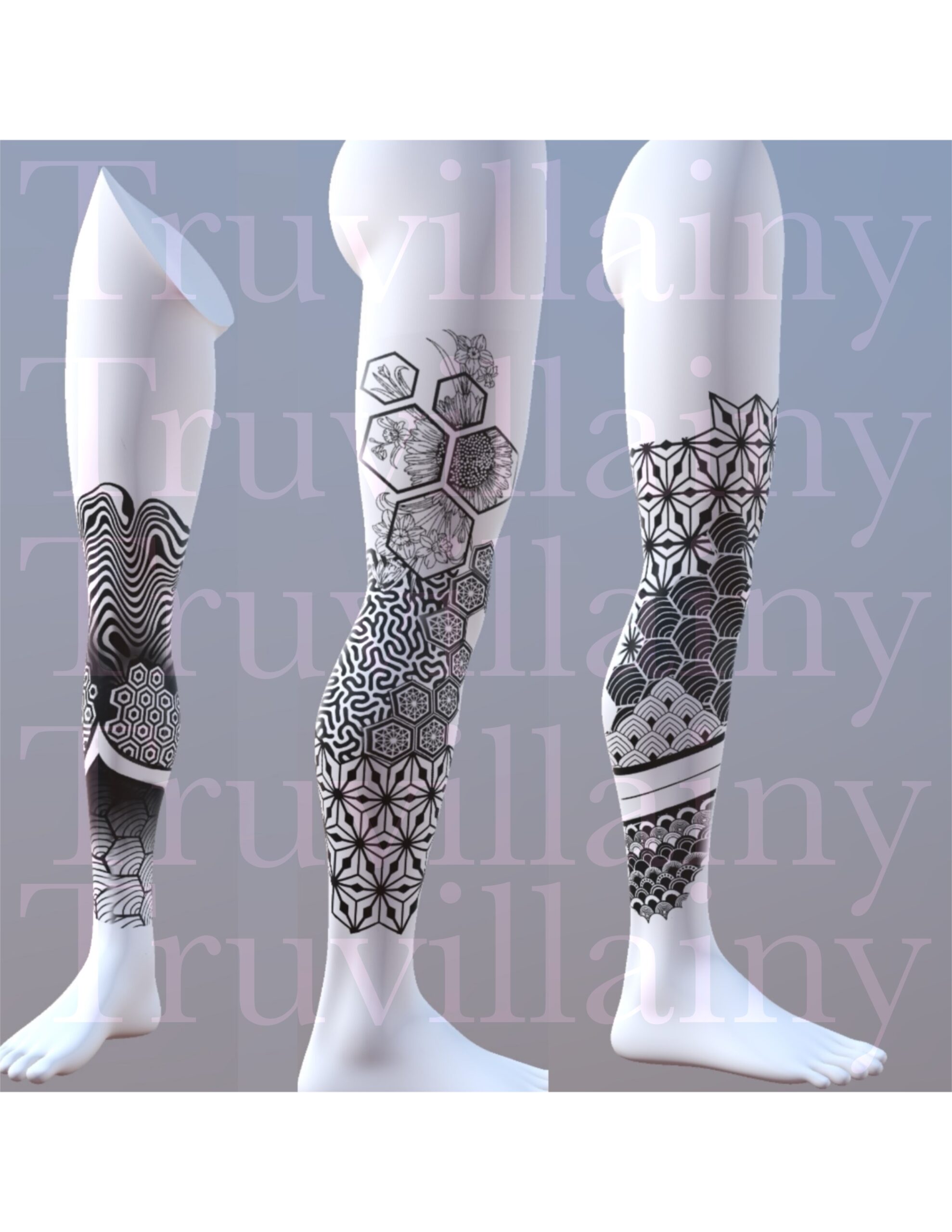
If I have most of an arm or leg available, I can treat that area like one large canvas.
I can think about:
- where the main focal point should sit,
- how the design wraps around the muscles,
- where the eye moves through the composition,
- where negative space belongs,
- how background elements connect larger pieces, and
- how the entire tattoo looks from several angles instead of only one.
More space generally gives the artist more freedom.
You are not constantly negotiating around a collection of smaller tattoos that already exist. Instead, you can map the design around the body itself.
That does not mean an existing tattoo automatically prevents a cohesive sleeve. Old work can sometimes be incorporated into a new composition, worked around, or in some situations tattooed over as part of a larger design.
It simply means there is more problem-solving involved.
When you start with an open canvas, it is easier to keep the scale, style, background, and overall visual flow consistent from the beginning.
Building a Sleeve One Tattoo at a Time Gives You More Freedom
Planning the entire arm from day one is not the right choice for everybody.
Building a sleeve one tattoo at a time has its own advantages.
For one thing, you do not have to marry one giant composition immediately.
You can get one tattoo, live with it, figure out what you like about it, and decide where you want to go next.
It is also usually easier financially.
Instead of committing to multiple long sessions for one large project, you may be sitting for two or three hours at a time and spreading the expense out over months or even years.
That can also make the process less intimidating for someone who is still getting comfortable with tattooing.
And some people genuinely do not want one huge image running down their arm.
They want a collection.
I think of it almost like a charm bracelet. You collect little things you love over time.
One tattoo might represent a trip. Another might be a character you like. Another may be something meaningful. Another might simply look cool.
Together, they become the sleeve.
That is the appeal of patchwork tattooing. The collection itself becomes the composition.
The Biggest Risk of Building a Sleeve Piece by Piece
The downside is that life tends to interfere with long-term tattoo plans.
You might start a sleeve with one artist and then move across the country.
The artist might relocate.
You might run out of money for a while.
Your taste may change.
The artist may stop tattooing.
Or you may simply decide you want somebody else to finish the project.
Sometimes you can look at a sleeve and immediately tell where one artist stopped and another started.
The linework changes. The saturation changes. The shading is different. The overall direction shifts.
That is not automatically bad, but it is something worth thinking about if visual consistency matters to you.
Building one piece at a time can also create awkward leftover spaces.
You may place several large tattoos around the arm and eventually realize you have a bunch of little gaps between them that are too small for another major image.
Now you are trying to fit a spider, an initial, a star, some smoke, dots, or another small design into a two-inch opening because you hate seeing bare skin there.
That is where filler becomes useful, but it is also where planning ahead can save some frustration.
Starting With One Large Anchor Piece Can Be a Smart Move
If you are not ready to plan the entire sleeve, starting with one large focal piece can be a very good middle ground.
A large tattoo immediately gives the rest of the arm something to build around.
For example, imagine someone starts with a large traditional anchor.
That one image already creates possibilities.
You could add a ship, waves, a lighthouse, rope, clouds, a kraken, or other nautical imagery later and still have the whole thing make sense.
The anchor establishes the visual world.
Starting large can also help psychologically.
Some people have talked about wanting a sleeve for years, but it never feels real until that first major piece is actually on their body.
Once it is there, they can look at the surrounding space and start imagining what comes next.
In my experience, beginning with a large anchor piece is often easier to build around than putting a very small tattoo in the middle of the same space.
Does a Tattoo Sleeve Have to Match?
No.
Whether a sleeve needs to be stylistically consistent is ultimately up to the person wearing it.
If you want one cohesive black and gray sleeve with similar line weight, shading, subject matter, and background throughout, then consistency matters a lot.
If your goal is simply to collect tattoos you love, then it may not matter at all.
You can have anime next to traditional work, black and gray next to color, or a detailed piece beside something extremely simple.
There are technical conventions in tattooing, but clients do not always care about following them.
I have tattooed designs that technically face or read in a direction I would not have chosen because the client wanted to see the image from their own perspective.
I can explain what is traditionally recommended. The client still has to live with the tattoo.
The same applies to sleeves.
A sleeve does not have to be stylistically consistent to be good. It only has to be consistent if that is the look you actually want.
Filler Is Not Automatically a Bad Thing
Filler gets treated like a dirty word sometimes, but filler is part of tattooing.
If your arm is already 80 percent covered and there are a few glaring empty spaces that bother you, filling those gaps makes sense.
People use stars, dots, smoke, small flowers, lettering, geometric patterns, tiny symbols, and all kinds of other imagery to connect larger tattoos.
Gap fillers are a real part of the job.
The harder situation is when almost every inch of space is already occupied and you are trying to force a new image into whatever random pocket of skin remains.
Trying to squeeze a spider into a tiny two-by-two-inch gap is much more limiting than designing that spider when the whole forearm is available.
There is also a difference between an awkward gap and intentional negative space.
Negative space can be part of the design from the beginning. It gives the eye somewhere to rest and can help separate important elements.
An awkward gap is simply a leftover area that may or may not bother the client.
Some traditional patchwork sleeves look great with visible skin between each tattoo. Other clients want stars and dots filling almost every opening.
Neither is automatically correct.
Can Multiple Tattoo Artists Work on the Same Sleeve?
Absolutely.
Mixing artists can work beautifully when it is intentional.
In an ideal situation, both artists understand what the overall goal is and can communicate about how their work will interact.
One artist may be exceptionally strong with clean linework while another is excellent at color saturation or a particular style of shading.
Used intentionally, those strengths can complement each other.
The other possibility is that the transition is obvious.
No two tattoo artists tattoo exactly the same way.
Even when I am trying to match another artist’s work closely, my approach, hand, line weight, or shading decisions may still make the finished tattoo look different.
If you are intentionally collecting work from several artists, that may be part of the appeal.
If you want the entire arm to look like one uninterrupted project, then choosing artists with compatible styles or having them collaborate becomes much more important.
If you are still choosing who should handle a larger project, my guide on how to choose a tattoo artist goes deeper into what to look for.
A Full Sleeve Usually Means Multiple Sessions
One of the biggest surprises clients run into with sleeves is the amount of time involved.
A full sleeve is rarely something you casually knock out in one evening.
Large projects often require multiple long sessions.
When an artist charges hourly, the total can climb quickly because you are paying for a lot of actual tattooing time.
That does not mean you need the entire budget sitting in your account before you begin.
If you want a cohesive sleeve but need to spread the cost out, one option is to plan the whole composition first and complete it in stages.
For example, I may approach a project like this:
- first session: establish the linework,
- allow the tattoo to heal,
- return for blacks and shading,
- allow that work to heal, and
- return again for color if the design includes it.
That gives the skin time to recover and gives the client time between appointments to budget for the next session.
It also means the sleeve still has one overall plan instead of becoming several unrelated tattoos simply because the client could not afford the entire project at once.
If you are trying to understand how much time a larger tattoo may require, I also break that down in How Long Does a Tattoo Take?.
You Do Not Have to Finish the Sleeve All at Once
Clients sometimes think there are only two choices:
either pay for an entire sleeve immediately or abandon the idea.
There is a lot of room between those options.
You can plan the entire design now and tattoo it over several appointments.
You can begin with one large focal piece and build outward later.
You can intentionally create a patchwork sleeve over several years.
You can even start with one idea and change direction as your taste changes.
The important thing is understanding what kind of project you are creating.
Do You Want a Designed Sleeve or Do You Just Want Your Arm Tattooed?
This is one of the most important distinctions clients can make.
People often say, “I want a sleeve,” when what they really mean is, “I want my whole arm covered in tattoos.”
There is nothing wrong with that.
But a fully designed sleeve is different.
A designed sleeve treats the entire arm as one composition. The subject matter, placement, scale, background, and transitions are considered together.
If that is what you want, the artist needs more information than a Pinterest photo of someone else’s completed sleeve.
A photo taken from one angle does not show what happens around the back of the arm. It does not explain how the elements connect. It does not tell the artist which parts of that image you actually care about.
The more specific you can be about the pieces you want included, the easier it is for the artist to build something original around your body rather than trying to reverse-engineer somebody else’s tattoo.
A consultation can be especially useful for projects this large because it gives both the client and artist a chance to talk through scale, placement, style, and expectations before committing to the full design. I explain that process more in What Happens at a Tattoo Consultation?.
So Should You Plan the Whole Sleeve or Build It Slowly?
If you already know you want one cohesive composition, planning the entire sleeve from the beginning usually gives the artist the most control over the final result.
You get better use of the available space, more deliberate flow, and fewer surprises later.
If you are still figuring out what you like, want to spread out the expense, enjoy collecting tattoos, or simply prefer patchwork, building the sleeve piece by piece may make more sense.
You do not need to know every tattoo you will ever want before getting your first one.
You just want to avoid making today’s decision unnecessarily difficult for tomorrow’s tattoo.
Leave yourself options.
Start with something strong.
And remember that a sleeve does not have to follow somebody else’s definition of what a sleeve is supposed to look like.
It only has to work for the person wearing it.