
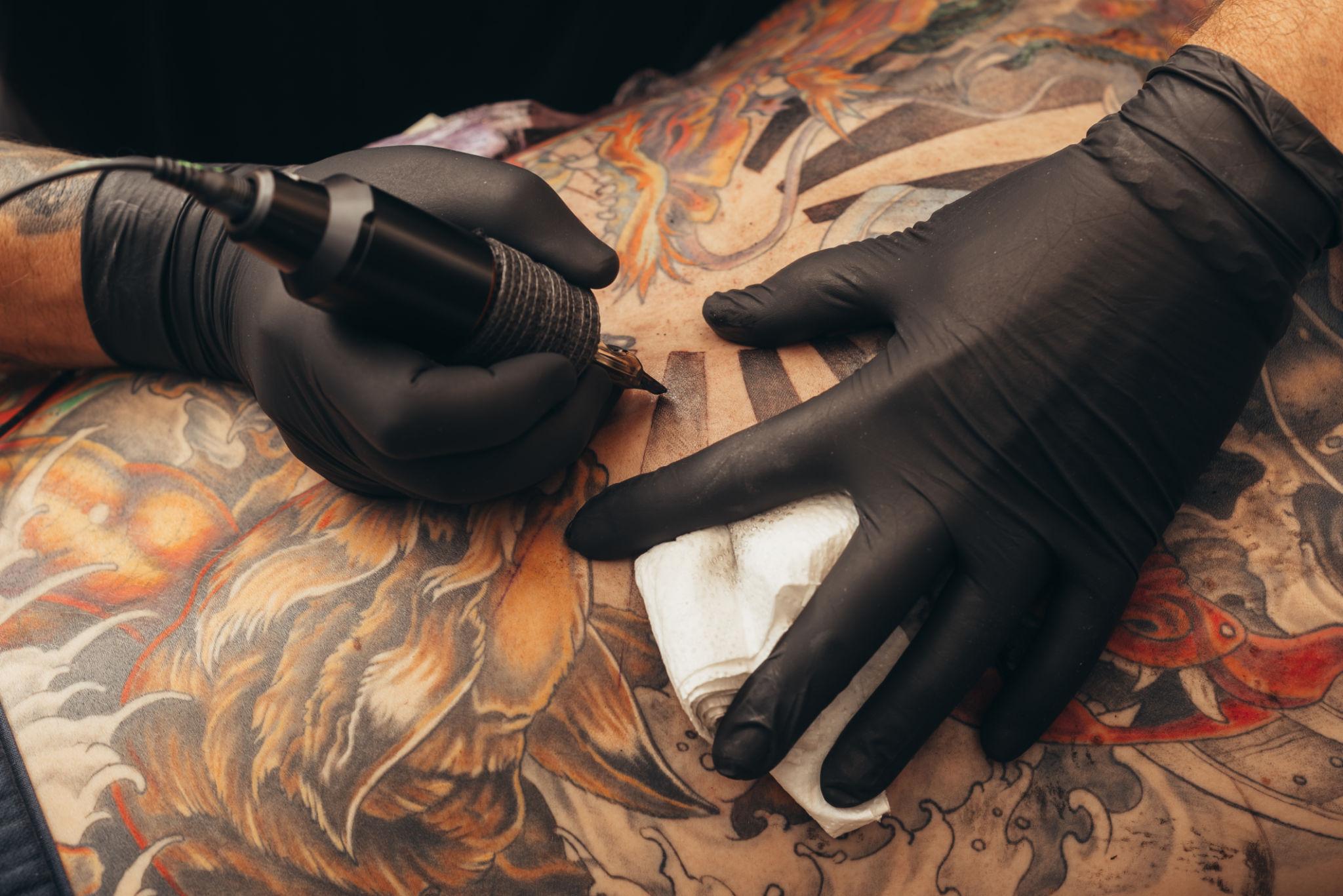
How long does a tattoo take?
The answer most clients probably do not want to hear is: I don’t know.
That isn’t me being evasive. There are simply too many variables involved to look at a picture someone sends me and accurately tell them exactly how many hours their tattoo will take.
Part of it depends on me. Part of it depends on the tattoo. And, whether clients realize it or not, part of it depends on them.
A small tattoo can sometimes take longer than expected because of the amount of precision involved. A larger tattoo can occasionally move surprisingly quickly because the design is straightforward. Placement matters. Breaks matter. The amount of time we spend getting the design and stencil right matters.
So when you’re planning a tattoo appointment, size is useful information, but it isn’t a stopwatch.
Why I Can’t Tell You Exactly How Long a Tattoo Will Take From a Picture
When a client sends me a reference and asks how long the tattoo will take, the first thing I need to understand is what we’re actually making.
How large will it be? How much detail are we trying to include? Is this a small standalone tattoo, or are you showing me somebody’s entire sleeve and asking how long it would take to create something similar?
Those are completely different projects.
There is also time involved before I ever start tattooing.
Maybe we make revisions to the design. Maybe we resize it. Maybe you see the stencil on your body and decide you want it slightly higher, lower, larger, smaller, or facing the opposite direction. There are plenty of reasons a tattoo artist may change or adjust your design before the tattoo begins.
None of that bothers me. I’d rather get those decisions right before we start.
If you’re having second thoughts once you arrive, that’s something to talk about before we start tattooing. I’ve written separately about changing your tattoo design on appointment day and the difference between a small adjustment and a change that may require us to start over.
All of that means your tattoo appointment time isn’t determined exclusively by how long my needle is touching your skin.
If you’re planning something like a sleeve or another large-scale piece, you’re probably not talking about a single appointment at all. That can become multiple tattoo sessions spread across weeks or even months.
That’s why a photograph by itself usually isn’t enough for me to give you an exact number.
You Can Make Your Own Tattoo Appointment Take Longer
Once the stencil is approved and I’ve actually started tattooing, one of the biggest variables is breaks.
Taking a break is normal. Sometimes you need to stretch, use the bathroom, eat something, or simply get out of the position you’ve been sitting in.
But frequent breaks add time.
If we’re stopping every few minutes, a tattoo that could have moved along fairly quickly is naturally going to take longer.
Distractions can do something similar.
Normal twitching and movement generally aren’t a huge issue for me. People aren’t statues, and as a tattoo artist, you learn how to work with normal body movement.
The harder situation is when someone is constantly on their phone, turning to talk to a friend, moving their body during a conversation, or otherwise doing things they don’t realize are moving the area I’m trying to tattoo.
Sometimes I can work around it. Sometimes I can tell you, “Real still, real still, real still,” get the line I need and keep moving.
Other times, I just have to wait until the conversation or movement stops.
A few seconds here and there may not sound like much, but over the course of a longer tattoo session, interruptions add up.
A Small Tattoo Isn’t Necessarily a Fast Tattoo
This is probably one of the biggest misconceptions about how long a tattoo takes.
Small does not automatically mean fast.
Sometimes a small tattoo takes considerably longer than someone expects because of the amount of finesse required to execute it properly.
When you’re working with a small design containing precise details, you don’t have much room for error. The technique itself may require me to work more deliberately.
Meanwhile, I can sometimes get into a rhythm with a much larger, bolder design.
If there are large areas that need to be saturated and the design gives me a very clear roadmap, the work can become almost like paint-by-number. I know exactly where everything goes, I can settle into the process, and the tattoo moves.
So if you’re comparing two tattoo ideas and one is physically smaller, don’t automatically assume it will take half as long.
Tattoo size matters, but complexity and technique matter too.
Placement Can Change How Long a Tattoo Takes
The body part we’re tattooing can also affect timing.
Two placements I personally find challenging are ribs and knuckles, although for almost opposite reasons.
With ribs, maintaining a good stretch on the skin can require a surprising amount of physical work. This can be particularly true on larger or curvier bodies, where I may need to stabilize and stretch a larger area of skin and tissue while simultaneously keeping my tattooing hand precise.
There are only so many hands available.
I’m holding and stretching the skin while also trying to control a tattoo machine with enough dexterity to execute the design properly. Depending on the client’s body and the exact placement, that can be physically demanding.
Knuckles present almost the reverse problem.
There isn’t much area to grip.
I’m trying to stabilize a hand, stretch a very small section of skin, and tattoo precisely on top of it at the same time. Smaller hands can make that even trickier because there is simply less surface area for me to work with.
Neither situation means the tattoo can’t be done. It means that placement affects the mechanics of tattooing, and those mechanics can affect time.
Your Last Tattoo Artist’s Speed Doesn’t Tell Me Much
Sometimes a client will tell me how long their previous tattoo artist took to do something.
My response to that is basically this:
The last guy who changed my oil might have done it twice as fast as the guy before him.
Okay. And?
Different tattoo artists work at different speeds.
Someone who has been tattooing for two years may work differently from someone who has been tattooing for six, ten, or twenty years. Artists develop different techniques, rhythms, and processes throughout their careers.
Even two experienced artists looking at similar tattoos aren’t necessarily going to complete them in the same amount of time.
That’s why telling your current artist, “Well, my last tattoo artist did something this size in two hours,” isn’t especially useful.
The same goes for price comparisons. How quickly or cheaply somebody else tattooed you doesn’t tell me how I should approach your tattoo.
If speed is particularly important to you, that’s something you can ask an artist about before booking. But I wouldn’t choose a tattoo artist based primarily on who promises to finish fastest.
Choose them because you want the tattoo that person makes.
How Do You Budget When Tattoo Time Isn’t Exact?
This is usually the practical reason behind the question.
You don’t necessarily care whether I’m tattooing you for two hours or three hours because you’re obsessed with clocks. You want to know how much money you need to bring.
That’s completely reasonable.
For smaller tattoos, generally pieces under about four inches, I’ll often use a flat price rather than an hourly tattoo rate.
One way I make that easier for clients is by offering different size options with corresponding prices.
For example, I might show you a small, medium, and large version of the design. Each one has its own price. You can look at the actual options and decide which combination of size and cost makes the most sense for you.
That takes a lot of uncertainty out of the decision. You know what you’re agreeing to before we begin.
For larger tattoos that are going to take more than a couple of hours, I’m more likely to charge hourly. If you need a range beforehand so you can prepare financially, I’ll try to give you one.
But a range is still a range.
If the tattoo requires more time, we take more breaks than anticipated, the placement proves particularly difficult, or other variables change the session, an estimate shouldn’t be treated like a guaranteed finish time.
So, How Long Does a Tattoo Take?
As long as it takes to do the tattoo properly.
I know. Annoying answer.
But I’d rather tell a client “I don’t know yet” than give them a confident three-hour estimate simply because three hours sounds reassuring.
A small tattoo isn’t automatically quick. A large tattoo isn’t automatically slow. A technically demanding design may require more attention than its size suggests. Placement can make my job easier or harder. Breaks and distractions can extend an appointment. And another tattoo artist’s speed has nothing to do with mine.
If you’re worried about tattoo pricing, ask. If you’re worried about sitting through a long tattoo session, ask about that too.
And if you’re working within a specific budget, tell your artist before the tattoo begins. There may be different sizes or approaches that allow you to choose something you’re comfortable paying for without turning the entire process into a race against the clock.
The goal isn’t to finish your tattoo as fast as humanly possible. Whether you’re choosing a tattoo because it carries personal meaning or simply because you love the artwork, what makes a tattoo worth getting matters a lot more than shaving an hour off the appointment.
The goal is to finish with a tattoo you actually wanted in the first place.