
Should You Get a Small Tattoo or Go Bigger?
When a client tells me they want a tattoo “really small,” I usually do not argue with them right away.
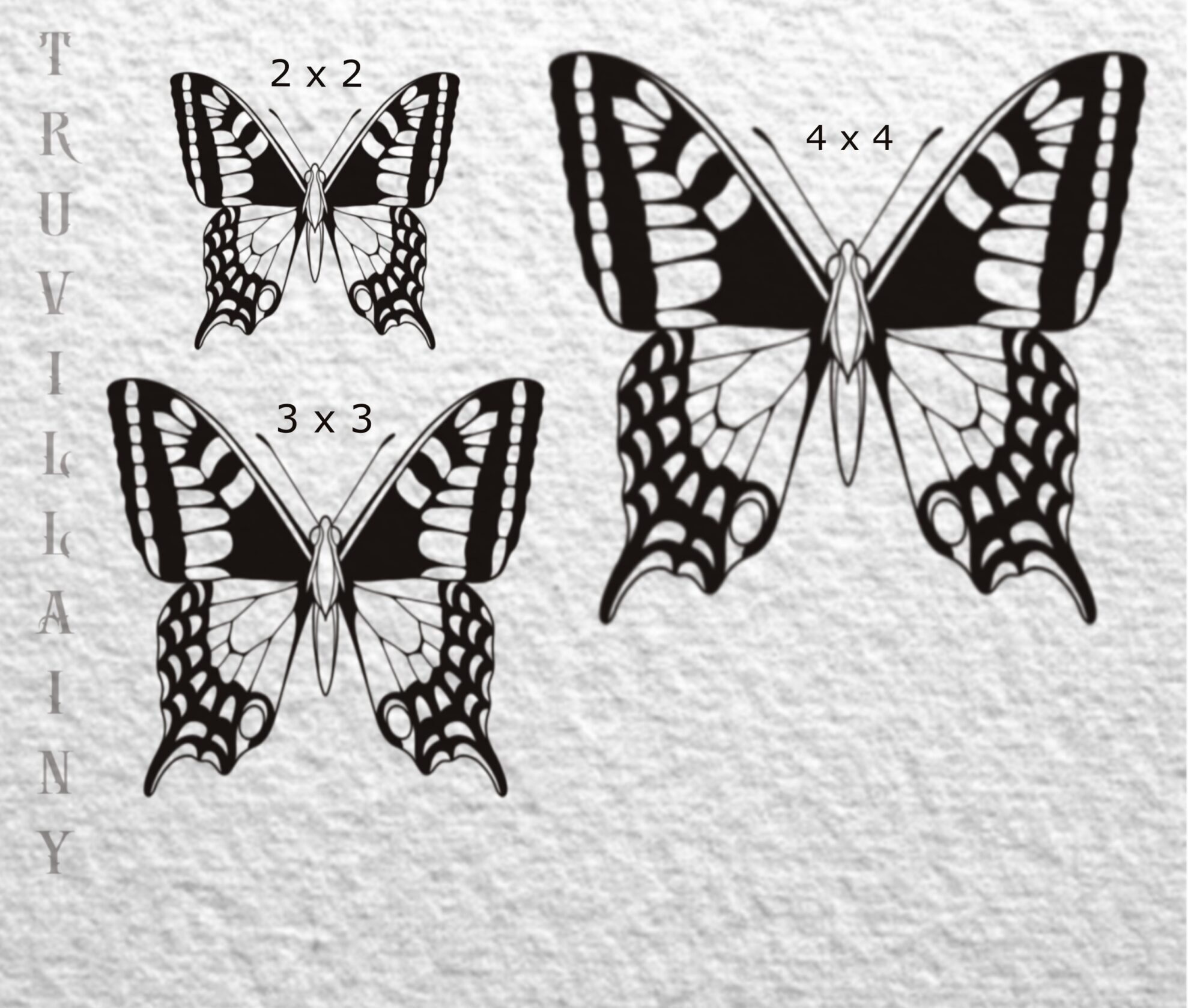
I print the design in three different sizes and let them see it for themselves.
That is usually the game changer.
People come in thinking they know what two inches looks like until they actually see two inches sitting on their six-foot-tall body. Once the design is physically in front of them, the tradeoffs become a lot easier to understand.
The real question is not just, “Can we make this tattoo smaller?”
It is, “Can we make it smaller without losing the things you liked about it in the first place?”
Small Tattoos Work Best When the Idea Is Simple
Small tattoos are not bad tattoos.
They just have less room to carry information.
Simple symbols, basic lettering, tiny florals and minimalist linework usually work better at a smaller scale because there is less information that needs to be communicated.
The smaller you make a tattoo, the simpler it usually needs to become.
If the design only needs a few clean lines to read well, great. That is exactly the kind of idea that can work small.
The problem starts when somebody wants a tiny tattoo that is also trying to do too much.
You Can Choose the Smaller Size, but You May Not Be Able to Choose the Same Design
This is probably the biggest thing I wish clients understood about tattoo sizing.
If you want to make a detailed design much smaller, I may have to start removing things.
Maybe I delete a few petals. Maybe I simplify the shading. Maybe some texture has to go. Maybe I remove tiny background elements or reduce the number of internal lines.
At a certain point, though, we may have removed so much that the design does not look like the reference you originally loved anymore.
That is why I would rather show a client three sizes and let them decide with their own eyes than simply tell them, “No, that will not work.”
Showing is usually better than telling.
Lettering Is One of the Biggest Things People Want Too Small
In my experience, lettering is probably the number-one thing clients try to cram into too little space.
Long quotes, dense lettering and tiny fonts can look appealing on a screen because everything is perfectly crisp and still.
Skin is not a screen.
Imagine trying to put the Lord’s Prayer in tiny lettering on the back of your hand.
Technically, you may be able to fit all those words there. But that is a huge amount of information packed into a small area on a body part that also gets a lot of everyday exposure.
As tattoos age, very small lines and tightly packed details can soften and lose separation. Sun exposure can also contribute to fading over time.
That does not mean every tiny lettering tattoo will suddenly become unreadable. It means the design has less room to tolerate normal aging before the words become harder to distinguish.
If readability matters, give the letters room.
Architecture Has the Same Problem
Architecture is another design category that clients often want too small.
Buildings come with windows, columns, rooflines, doors, trim, straight edges and little structural details that make the reference recognizable.
Shrink all of that too far and something has to give.
You either simplify the building or accept that the smaller details may not stay as visually distinct over time.
The same logic applies to anything with a lot of tightly packed information.
Portraits Can Work Small, but There Is Still a Limit
Portraits can sometimes be a little more forgiving than dense lettering or architecture because they are not always relying on a ton of hard outlines.
But small realism can still take a surprising amount of time and precision.
If we are doing a miniature realistic tiger head, I still have to create fur, eyes, highlights, shadows and texture.
If we are doing a tiny portrait of your grandma, her face still has structure, wrinkles, expression, lighting and value changes.
Making the tattoo smaller does not make those things disappear.
Sometimes it just gives me less room to execute them.
Bigger Gives the Tattoo More Room to Breathe
Going larger gives me a lot more options.
I can create stronger contrast, better separation between elements, more skin breaks and more readable value changes.
I can also preserve more of the details that made you fall in love with the reference in the first place.
That extra space matters.
When elements have room between them, the tattoo can read more clearly from a distance and feel less crowded up close.
It also gives me more flexibility with shading and composition.
In my experience, I have almost never regretted giving a tattoo more room.
Sometimes a Bigger Tattoo Simply Fits the Body Better
Clients often think about tattoo size in inches.
I am also thinking about proportion.
A two-inch tattoo may sound perfect until you put it on a large forearm, thigh, shoulder or calf and realize it looks like a tiny object floating in the middle of a huge amount of empty space.
That does not automatically make the tattoo wrong.
But sometimes going larger makes the piece look more intentional because it actually relates to the body part it is sitting on.
The tattoo stops looking like something we dropped onto the skin and starts looking like something we designed for that part of the body.
Small Does Not Always Mean Fast, Cheap or Easy
Clients often choose the smallest option because they assume it will automatically be cheaper, faster and less painful.
Sometimes it will be.
But the difference is not always as dramatic as people expect.
A small, highly detailed tattoo can still require a lot of precision, careful stencil placement, controlled shading and repeated adjustments.
Tiny realism is a perfect example.
A miniature tiger still has fur. A tiny portrait still has facial features. Small lettering still needs spacing and control.
So yes, going smaller may reduce the total tattoo time. But if the design becomes harder to execute cleanly at that scale, “small” does not necessarily mean “simple.”
And if shrinking the tattoo sacrifices the qualities you cared about most, the cheaper option may not actually be the better value.
Think About Future Tattoos Before You Place a Tiny One
I ask people about future tattoo plans all the time.
Before I place a stencil, I may ask, “What are your plans for this arm?” or “Do you think you will want more tattoos on this leg later?”
That matters because body space is real estate.
If you place a tiny rose or a tiny tiger head directly in the middle of your forearm, every future tattoo now has to work around that little design.
Sometimes moving the small tattoo slightly to one side leaves better space for a larger piece later.
Other times, making the original tattoo larger creates a stronger composition from the beginning.
You do not need to plan an entire sleeve before getting one small tattoo.
But thinking one move ahead can save you from awkward placement problems later.
What If You Still Really Want It Tiny?
At some point, it is your body and your decision.
If I have shown you the size options, explained what details may be lost and you still want the smallest version, then the design has to adapt to the size you chose.
I am not going to force every original detail into a space that cannot support it.
Instead, I simplify.
I remove secondary elements, reduce tiny internal details, clean up the composition and keep the parts the tattoo actually needs to remain readable.
That is the tradeoff.
You can choose the smaller size, but you may not be able to choose the same design.
Is There Such a Thing as Too Big?
In my experience, the size problem is overwhelmingly the opposite.
People usually want tattoos too small, not too large.
I have almost never looked at a tattoo after giving it more room and thought, “We really should have made that smaller.”
More often, the conversation is, “We can probably get away with making it this small, but should we?”
Bigger is not automatically better for every tattoo in every situation.
But when a design depends on detail, contrast, texture or multiple elements, more room usually gives me more options and fewer compromises.
So Should You Get a Small Tattoo or Go Bigger?
Choose small when the idea itself is simple.
A symbol, short word, tiny flower or minimalist design may not need much room to work well.
Go bigger when the design depends on detail, dense lettering, realistic texture, architecture, layered imagery or strong contrast.
And if your artist suggests increasing the size, ask them why.
A good artist should be able to show you what changes between the small version and the larger one.
That is why I like printing multiple sizes.
You should be able to see what you are gaining or losing before the stencil ever touches your skin.
The question with a small tattoo is rarely just, “Can we make it this small?”
The better question is, “Can we make it this small without ruining what you liked about it?”