
The stencil may look great everywhere on a flat sheet of paper. On your body, placement changes the entire tattoo: its scale, how it moves, how often you see it, how it heals, and whether the design still feels right years from now. That is why tattoo placement for first timers is less about finding the least painful spot and more about choosing a location that supports the artwork and your real life.
A good first tattoo does not need to be hidden, tiny, or placed in a “safe” spot. It does need enough room to be tattooed cleanly, a design that suits the body part, and a placement you will be comfortable living with. Those priorities often point to different answers for different people.
Start With the Design, Not the Pain Chart
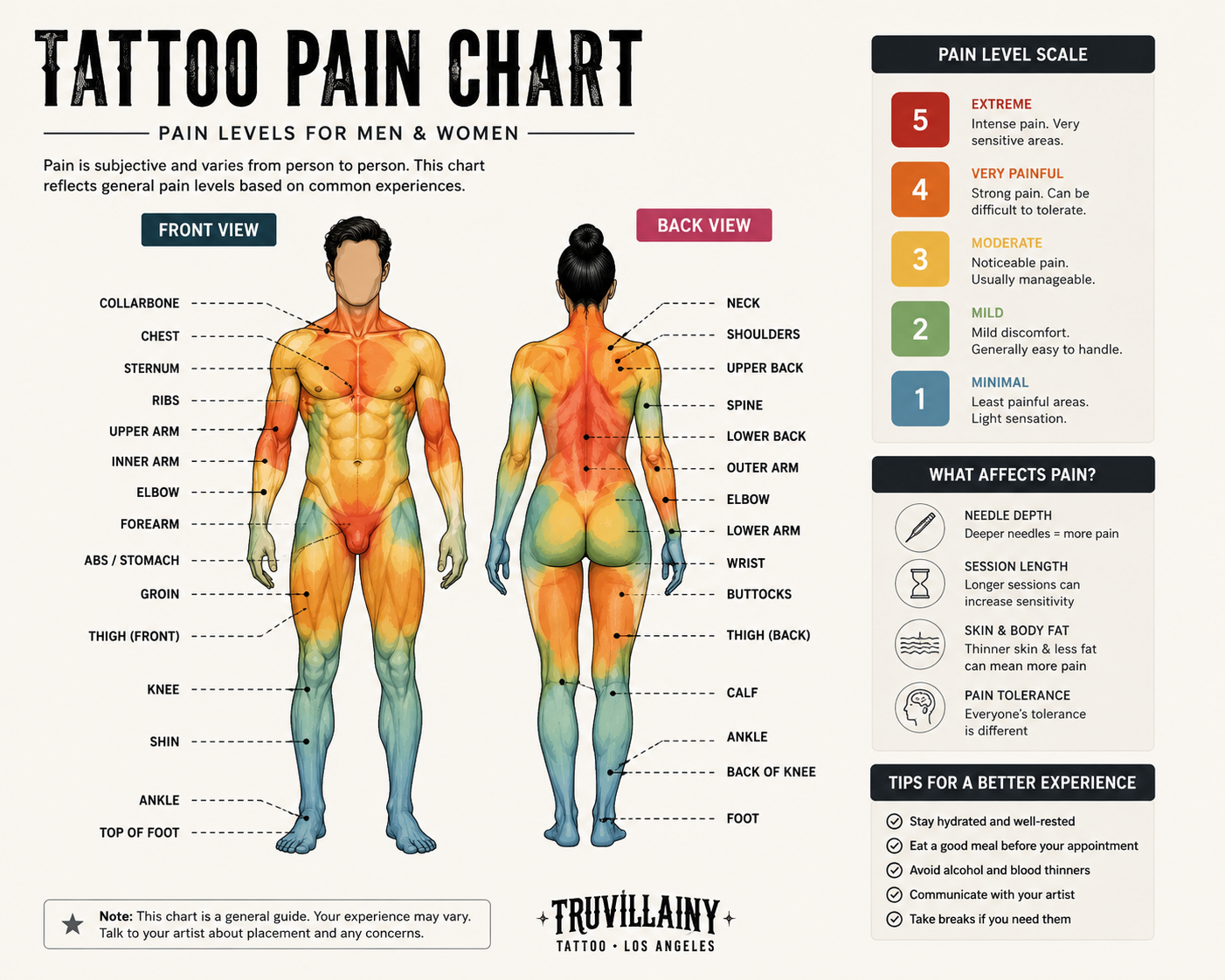
Pain matters, especially if you have never been tattooed. But choosing placement from a pain-ranking graphic alone can lead to a compromised result. The better first question is: where can this specific design breathe?
A fine line botanical branch may work beautifully along the forearm, upper arm, calf, or outer thigh because those areas give the stem room to follow a natural line. A small animal portrait needs enough open skin for its facial features to remain readable. A bold neo-traditional design needs room for confident outlines and color or black-and-gray contrast. If the available space is too tight, an artist may need to simplify the design, make it larger, or suggest another area.
Body shape is part of the composition. Muscles, joints, curves, and bone structure can make a tattoo feel intentional when the design follows them. A custom tattoo should look like it belongs on you, not like an image that was pressed onto the nearest blank space.
Size Is Usually the Deciding Factor
Many first-time clients arrive with a small reference image and a very specific placement in mind. Sometimes it works. Other times, the tattoo needs to be larger than expected to preserve the details that made them love it in the first place.
Fine line does not mean microscopic. Lines that are packed too closely together can soften as skin changes over time, especially in a detailed design. Small text, delicate faces, dense foliage, and tiny negative spaces all need realistic planning. A thoughtful artist will explain what can hold up in a chosen area rather than simply tattooing the smallest version possible.
How Tattoo Placement for First Timers Affects Pain
Every person experiences tattoo pain differently. Sleep, hydration, anxiety, hormones, physical sensitivity, the session length, and the artist’s technique can all change the experience. Still, certain placements tend to be easier for many clients because they have more muscle or padding and fewer highly sensitive areas.
The outer upper arm, forearm, outer thigh, calf, and upper back are often manageable choices for a first tattoo. They also offer useful space for a range of custom designs. This does not make them painless, but they are generally easier to sit through than placements directly over bone or areas with thin, delicate skin.
Ribs, sternum, spine, feet, ankles, hands, fingers, armpits, and the inner portions of the arm or thigh can feel more intense. They can also be more challenging for healing because of movement, clothing, sweat, and friction. That does not mean these areas are off-limits for a first tattoo. It means the decision should be based on more than a photo you liked online.
If a rib tattoo is the design you truly want, waiting for a less painful placement may not be the right answer. Go in rested, eat a real meal beforehand, communicate clearly, and expect that the appointment may require more focus. An honest consultation can help you decide whether the design, size, and session length are realistic for you.
Visibility Is a Personal Decision, Not a Rule
Your first tattoo can be highly visible or completely private. The useful question is how much you want to interact with it day to day.
Forearm tattoos are easy to enjoy because you can see them often. They are also hard to ignore during job changes, formal events, family gatherings, and any situation where you prefer more control over what is visible. Upper arms, thighs, calves, upper back, and chest placements can offer more flexibility while still allowing a substantial design.
Hands, neck, and face tattoos deserve especially careful consideration. They are prominent, often heal and fade differently than more protected areas, and may limit future design choices. A quality artist may recommend building your collection elsewhere first, not because visible tattoos are inherently wrong, but because permanent visibility is a serious commitment.
Think about uniforms, work dress codes, sun exposure, sports, and the kind of clothing you actually wear. If you spend most weekends in sleeveless tops, an upper-arm tattoo is not truly hidden. If you work outdoors, a forearm tattoo will need consistent sun protection to help maintain its contrast.
Healing Can Change the Best Placement
A placement can be perfect visually and still be inconvenient during the healing period. Fresh tattoos need to stay clean, avoid soaking, and be protected from unnecessary friction. The first couple of weeks are easier when you plan around how your body moves and what touches the area.
A waistband can rub a hip or lower-stomach tattoo. Tight boots can irritate an ankle piece. A bra strap can repeatedly hit a shoulder-blade tattoo. Gym routines can be difficult with tattoos in high-movement areas, particularly if equipment, sweat, or tight athletic clothing will contact the fresh work. If you have a vacation, beach day, long hike, or demanding athletic event coming up, timing may matter as much as location.
Hands and feet deserve extra patience. They experience frequent washing, pressure, and daily wear. Some designs in these areas require touch-ups, and healing can be less predictable. Your artist should be clear about those possibilities before you commit.
Consider How the Skin and Tattoo Will Age Together
All tattoos change subtly over time. Sun exposure, natural skin aging, weight changes, and the original technical choices affect how a piece settles in. Placement can either protect the design or expose it to more wear.
Areas that see regular sun, such as hands, forearms, shoulders, and feet, often require more diligent sunscreen once fully healed. High-friction spots may soften faster than protected areas. That does not make exposed tattoos a bad choice. It simply means an outdoor lifestyle calls for realistic maintenance.
Design choices matter too. Strong contrast, enough spacing, and a scale suited to the placement give a tattoo more opportunity to age well. This is especially relevant for black-and-gray and fine line work, where subtle detail should still have a readable structure underneath it.
Skin tone should be part of the design conversation, not an afterthought. Different pigments, contrast levels, and lighting conditions affect how a tattoo reads on the skin. On melanated skin, for example, an artist may adjust values, line weight, spacing, or color choices so the design remains clear and intentional. The goal is not to force every reference image into the same formula. It is to create work that is designed for the individual wearing it.
Bring Your Idea, Then Stay Open to Adjustment
A consultation is where placement becomes practical. Bring reference images for mood, subject matter, and style, but be ready to explain what you connect with about them. Is it the shape of the animal, the softness of the shading, the way leaves wrap around an arm, or the symbolism behind the image? That information gives the artist something more useful than a screenshot to copy.
At TruVillainy Tattoo, custom work begins with that kind of conversation. An artist can assess your preferred placement in person, consider the skin and anatomy, and recommend changes that protect the design rather than diminish your idea.
It helps to wear clothing that gives access to the area you are considering. If you are deciding between several placements, ask to see a rough size or stencil in each location. Looking in the mirror, moving your arm, sitting down, and seeing the design from normal viewing distance can answer questions that a phone mockup cannot.
Do not feel pressured to decide on the spot. A tattoo is permanent, and taking a few days to think through size, visibility, and timing is responsible, not indecisive. The right placement is usually the one where the design has room, the healing process fits your schedule, and you can picture it as part of your body rather than a reaction to a trend.
Choose the area that lets the artwork be honest about what it needs. That first tattoo should feel considered when it is fresh, and still feel like yours after it has become familiar.